

When to Call an Exterior Contractor Instead of Managing Multiple Trades
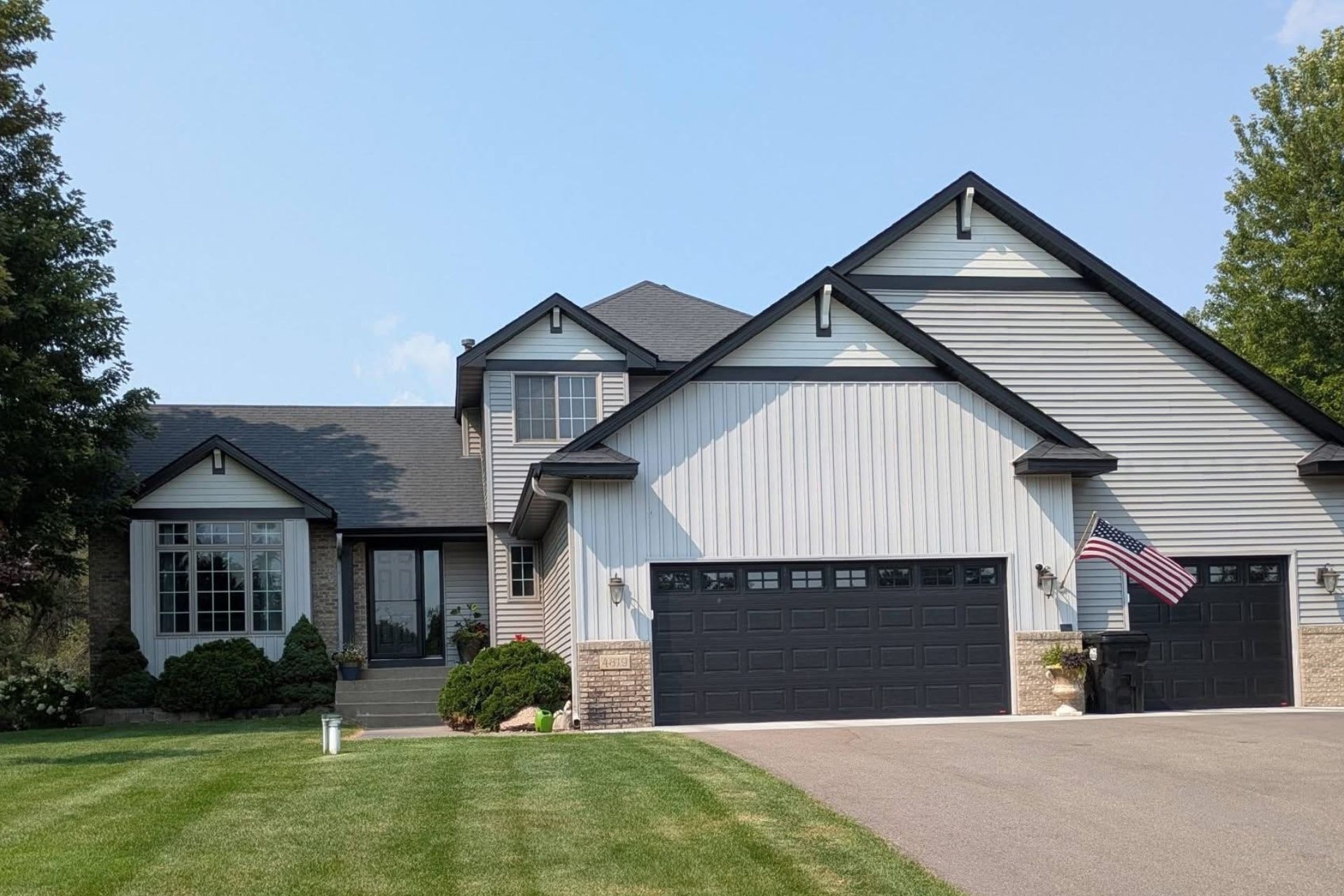
A spring hailstorm rolls through Ham Lake. By the next morning you have dented gutters, a few lifted shingles, and a soft spot on the siding you hadn't noticed before. So you start making calls: a roofer for the shingles, a gutter company for the downspouts, maybe a separate crew for the siding. Suddenly you're the project manager for three companies who have never met each other, all pointing at the same wall of your house.
This is one of the most common situations Minnesota homeowners find themselves in, and it raises a fair question:
when should you call a single exterior contractor instead of managing multiple trades yourself?
This guide breaks down exactly when one exterior contractor makes your project faster, cheaper, and less stressful, and the handful of times hiring an individual trade still makes sense. If you're at the very start of vetting anyone, pair this with our companion post, How to Know If a Contractor Is Legit in Minnesota, so you can hire with confidence.
What Is an Exterior Contractor?
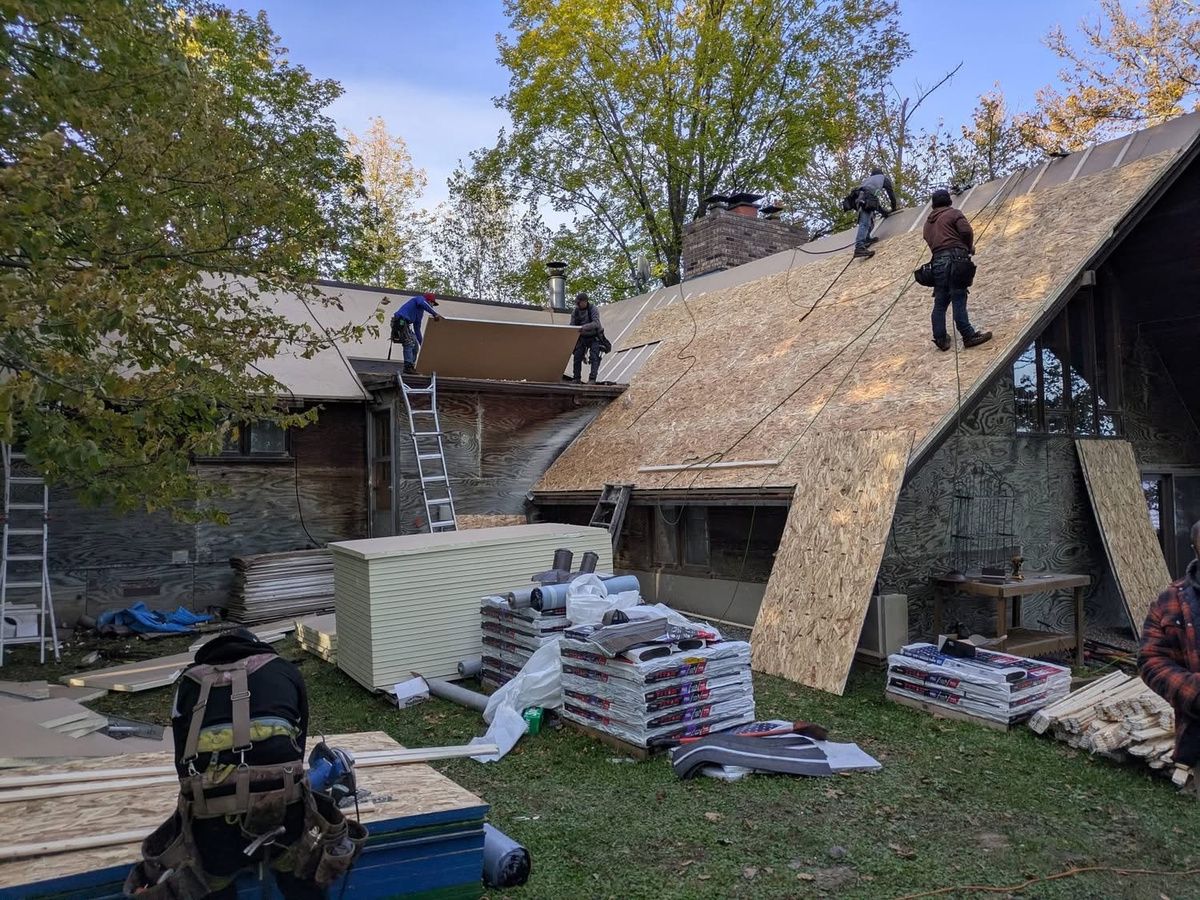
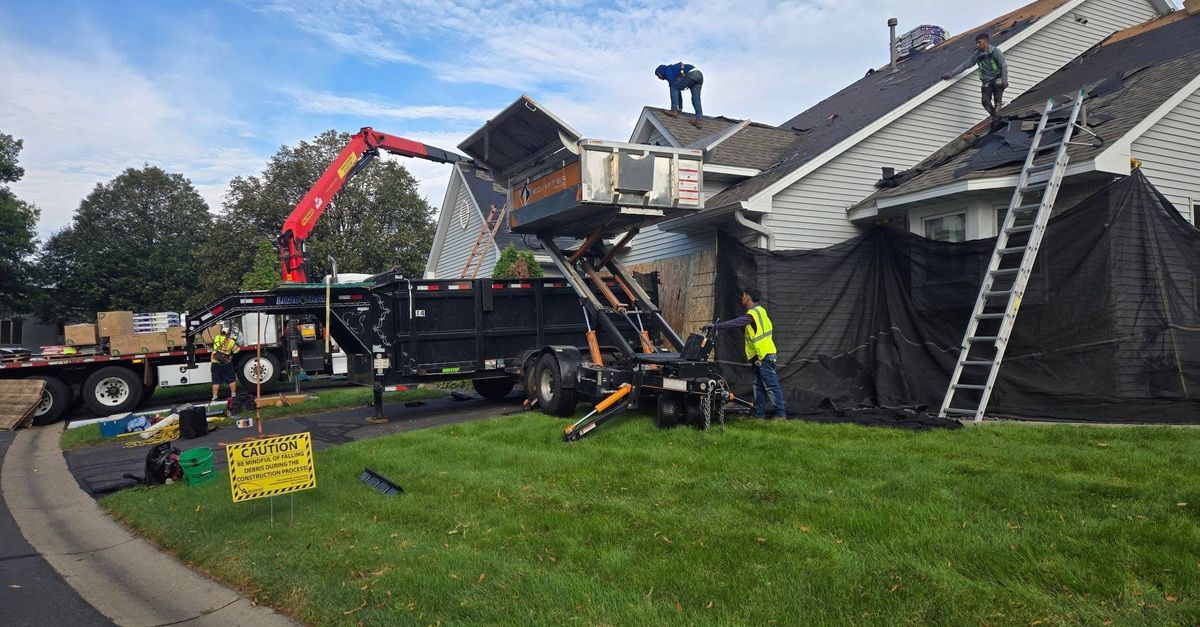
An exterior contractor is a company that handles the systems on the outside of your home as a coordinated whole rather than as separate, unrelated jobs. That typically includes roofing, siding, windows, gutters,
decks, and
storm damage restoration.
The key difference from a single-trade specialist is scope. A roofing-only company installs and repairs roofs. An exterior contractor looks at how your roof, gutters, siding, and windows work together to keep water out and manage Minnesota's freeze-thaw cycles, then plans the work so those systems support each other. One point of contact, one schedule, one warranty conversation.
Managing Multiple Trades: Why Homeowners Do It (and Where It Goes Wrong)
Hiring individual trades feels logical. You want the "best roofer" and the "best window guy," so you assemble your own team. For a single, isolated repair, that instinct is often right. The trouble starts when the project touches more than one exterior system at once, which happens more than most homeowners expect.
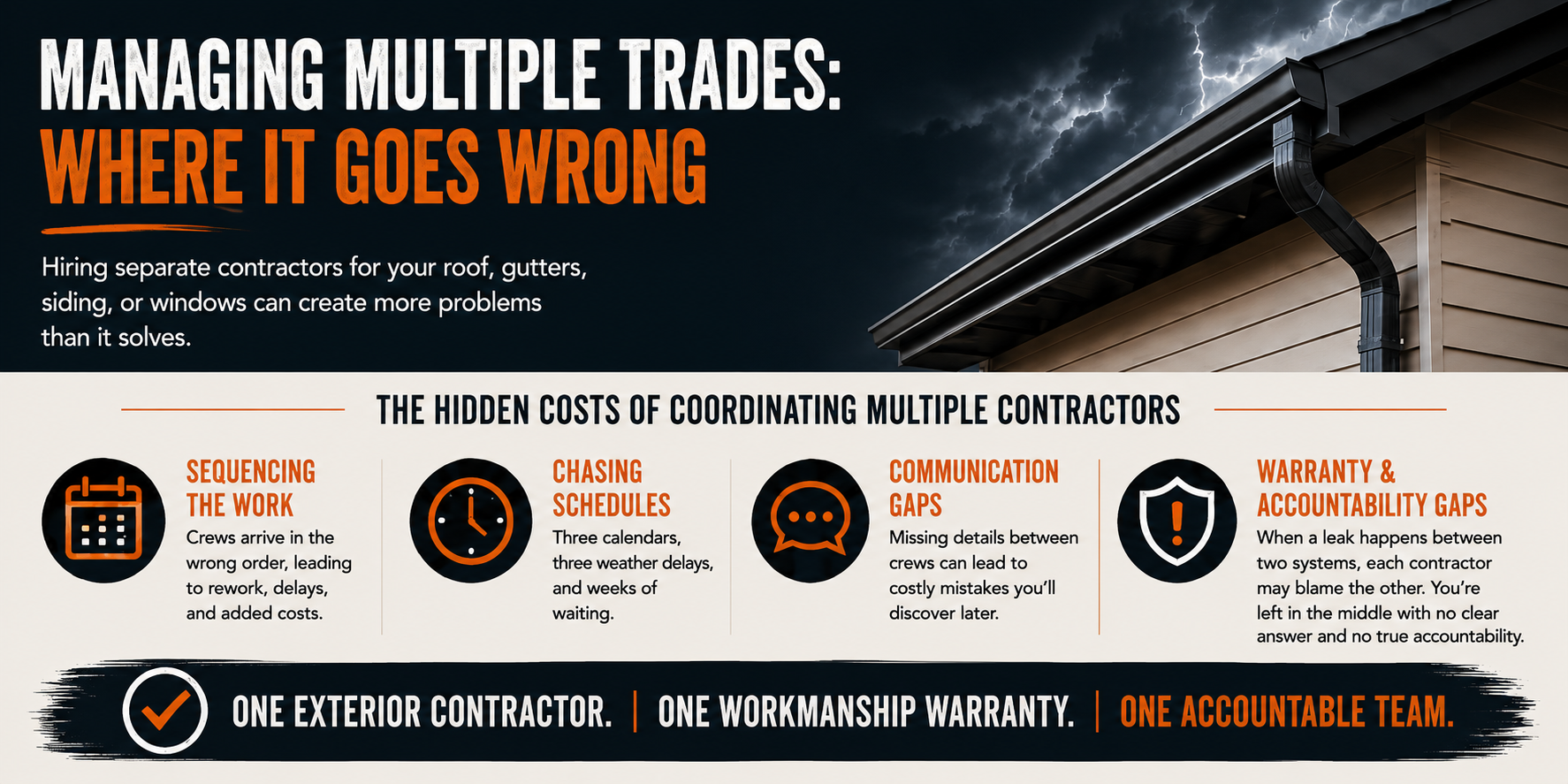
The Hidden Costs of Coordinating Multiple Contractors
When you hire separately, you inherit the general contractor's job without the general contractor's tools. That means:
• Sequencing the work. Gutters usually go on after fascia and roofing. Siding often needs to be flashed into the roofline. If your crews arrive in the wrong order, someone ends up tearing out and redoing another company's work.
• Chasing schedules. Three companies means three calendars, three weather delays, and three sets of "we'll get you on the books next week." A two-week project can stretch into two months of waiting.
• Bridging communication gaps. The roofer assumes the siding crew is handling a transition detail. The siding crew assumes the roofer did. You find out neither did when water shows up in the basement.
None of these costs appear on an estimate. They show up as your time, your stress, and often a change order down the road.
Warranty and Accountability Gaps
This is the part that catches people. When one company touches your roof and another touches your siding, and a leak appears where the two meet, who is responsible?
In practice, each contractor points at the other. Your roofing warranty may be voided because the siding crew disturbed the flashing. Your siding warranty may not cover water intrusion that "originated at the roof." You're left as the referee in a dispute you have no way to settle. A single exterior contractor eliminates that gap because the entire exterior falls under one workmanship warranty and one accountable party.

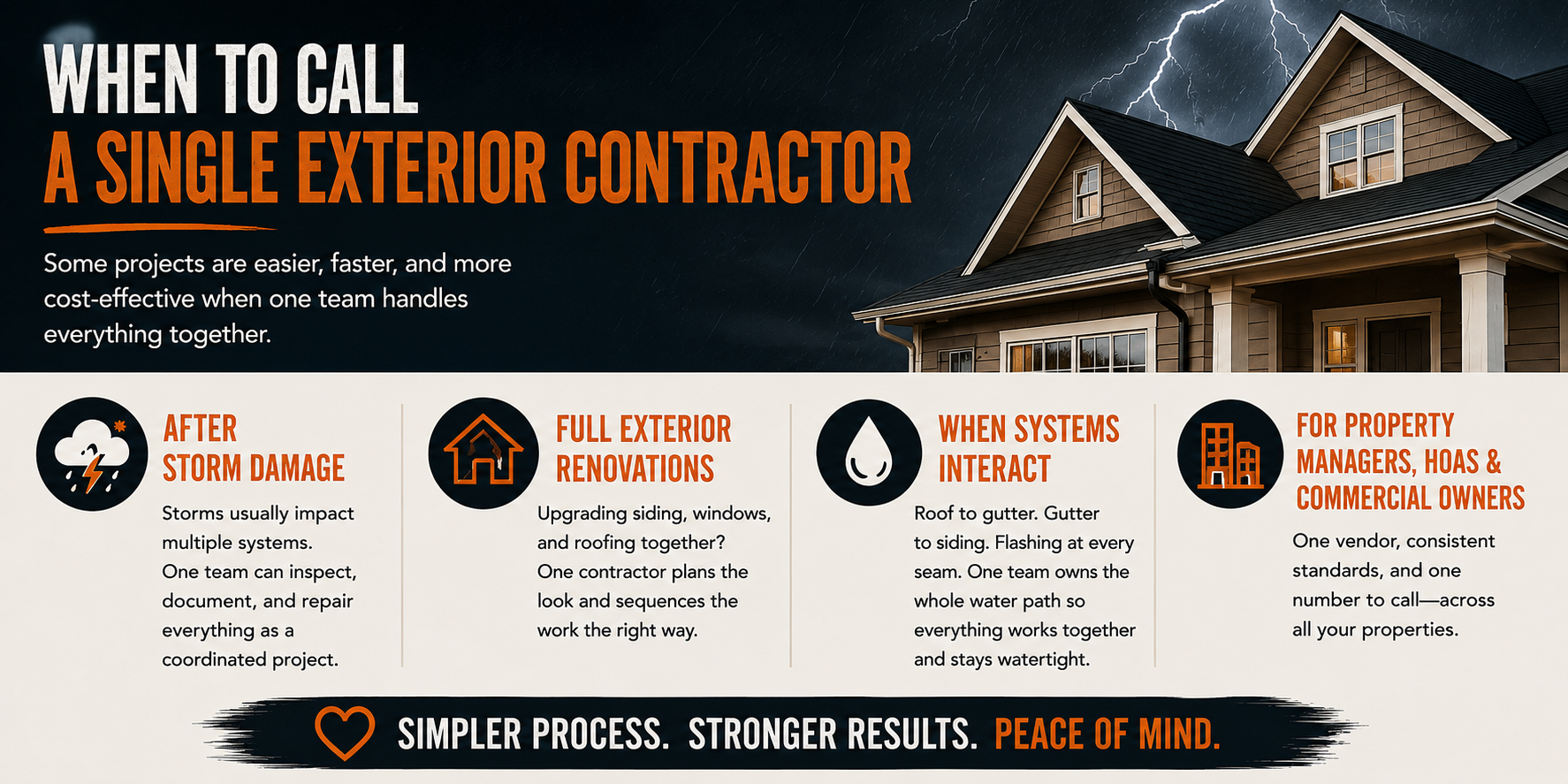
When to Call a Single Exterior Contractor
Here are the clearest situations where consolidating under one exterior contractor is the better call.
After Storm Damage
Minnesota storms rarely damage just one thing. A single hail or wind event often affects the roof, gutters, siding, and sometimes windows all at once. When multiple systems are hit together, one contractor can inspect the full exterior, document everything in a single, consistent report, and repair it as a coordinated project rather than four disconnected ones.
This matters most when your project is part of a storm damage restoration. Having one team document and repair the entire exterior keeps your records clean and your timeline tight, and it means no one is guessing about where one company's work ended and the next began.
Full Exterior Renovations and Curb Appeal Upgrades
If you're planning a larger refresh, say, new siding, new windows, and a re-shingle in the same season, these decisions are connected. Siding color, roof color, and window trim all read together from the curb. A single exterior contractor can plan the look as a whole and stage the trades so the house isn't half-finished for months. You get a coherent result instead of three separate projects that happen to share an address.
When Multiple Systems Interact
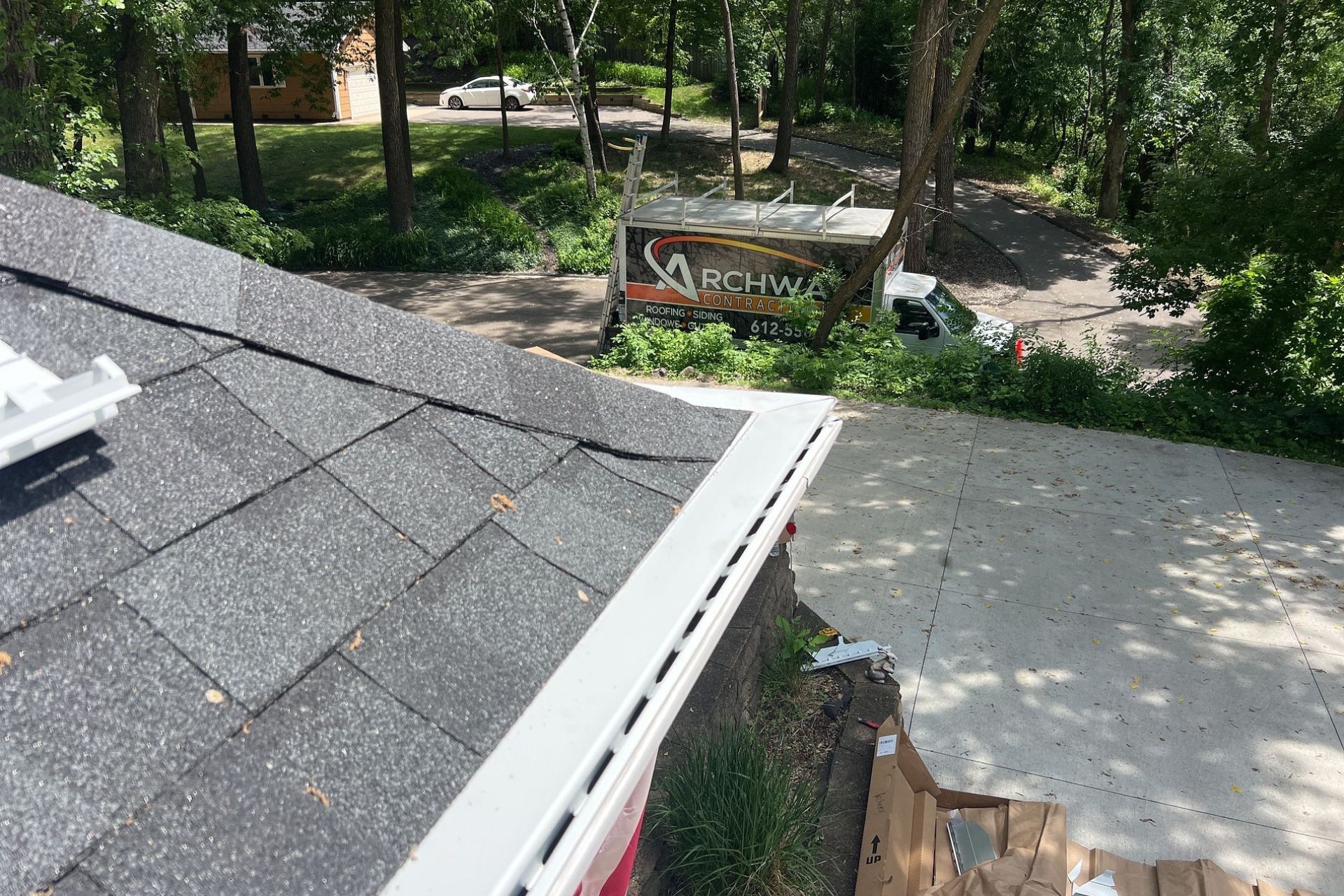
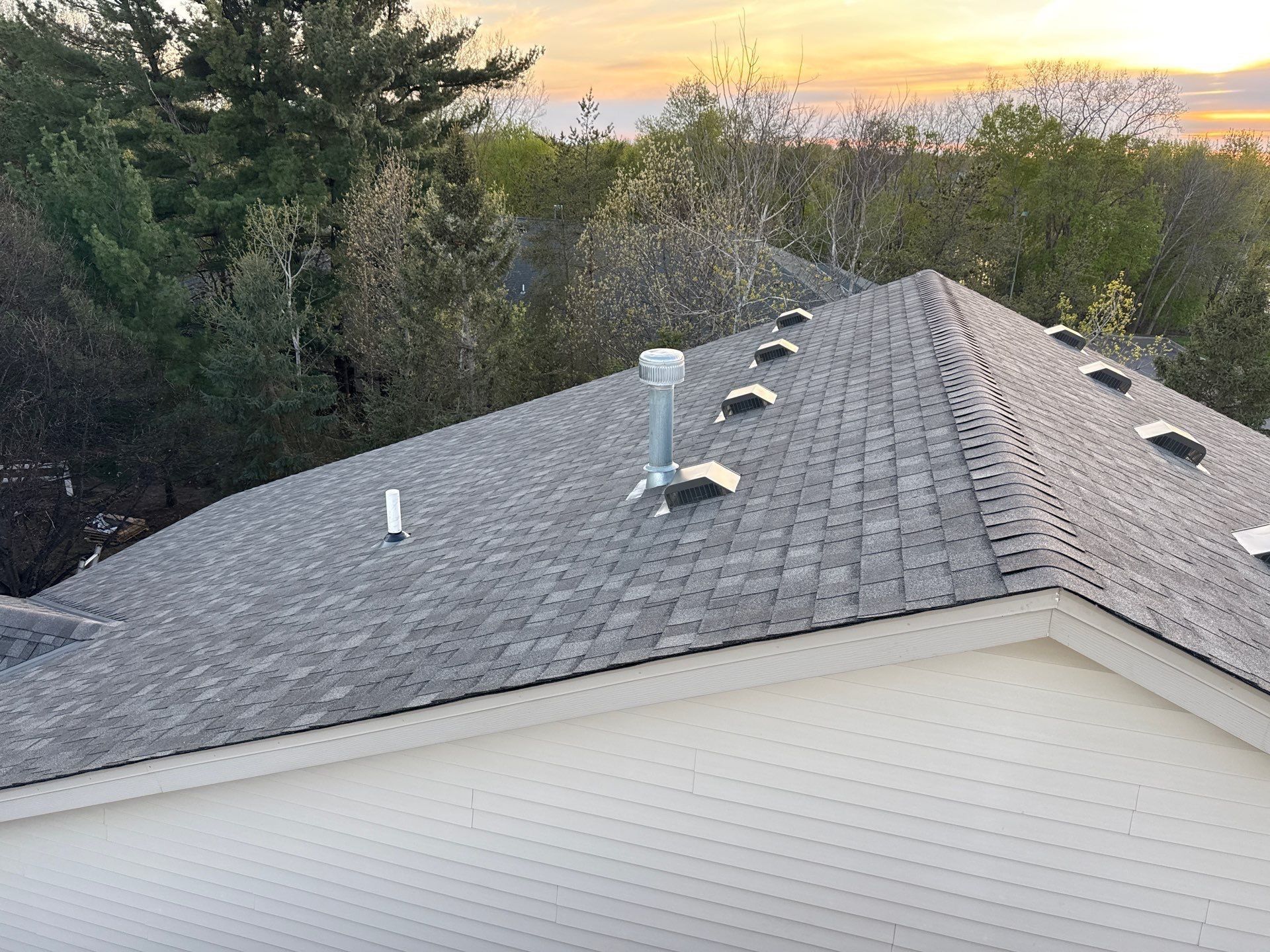
Water management is a system, not a set of parts. Your roof sheds water into your gutters, your gutters carry it away from your siding and foundation, and your flashing seals the seams where everything connects. When a project touches those interaction points, splitting it across companies is where leaks are born. One contractor who owns the whole water path can flash, seal, and slope everything to work together.
When You're a Property Manager, HOA Board, or Own Multiple Buildings
For property managers, HOA boards, and commercial property owners, the coordination burden multiplies with every unit and building. One exterior contractor gives you a single vendor relationship, consistent standards across properties, and one number to call when something needs attention. That's far easier to manage than a rotating cast of single-trade crews across a portfolio.

When Managing Individual Trades Might Still Make Sense
To be straight with you: one contractor is not always the answer. There are legitimate times to hire a single trade directly.
• A truly isolated repair. A few blown-off shingles with no other damage, or one leaking window, may be a simple single-trade fix. If nothing else is involved, there's no coordination to consolidate.
• Highly specialized work. Certain custom or historic-restoration details fall outside standard exterior scope and call for a dedicated specialist.
• You genuinely have the time and knowledge to manage it. If you have general-contracting experience and the schedule to sequence and supervise crews, doing it yourself can save on overhead.
The honest rule of thumb: the more systems your project touches, the more a single exterior contractor is worth. A one-window replacement leans toward a specialist. A storm that hit your roof, gutters, and siding leans strongly toward one team.

How an Exterior Contractor Coordinates the Work
If you've only ever hired trades one at a time, here's what changes when a single exterior contractor runs the project.
It usually starts with one thorough inspection of the entire exterior instead of separate visits from separate companies. From there you get a single, itemized estimate covering every system involved, so you can see how the pieces relate and where the budget goes. Once the work begins, the contractor sequences the trades in the right order, roof before gutters, flashing before siding, so nothing gets installed twice. When the project wraps, one workmanship warranty covers the whole exterior, and you have one point of contact if anything ever needs a look.
That single-point-of-contact structure is the entire value. You're buying back your time and removing the finger-pointing risk.
Signs You've Found the Right Exterior Contractor
Consolidating under one contractor only helps if that contractor is trustworthy and qualified. Before you sign anything, confirm the basics:
• Licensing and insurance. In Minnesota, verify the contractor's license and ask for proof of liability and workers' compensation coverage.
• Local presence. A contractor who serves your area, whether that's Ham Lake, Blaine, Andover, or the broader Twin Cities, knows local permitting, code, and how our climate stresses an exterior.
• Clear, written scope. A legitimate exterior contractor gives you an itemized estimate and honest recommendations, not a vague lump sum and pressure to sign today.
•
Real reviews and references. Look for a track record you can actually check.
We covered every one of these red and green flags in detail in How to Know If a Contractor Is Legit in Minnesota. Read that alongside this post, and you'll be able to both choose the right project structure and vet the company running it.
Minnesota-Specific Considerations
Our climate is exactly why the "one contractor vs. many" question matters more here than in milder regions. Minnesota exteriors take a beating from all sides: hail and high winds in spring and summer, then months of freeze-thaw cycling and ice dams in winter.
That freeze-thaw pattern is what makes coordinated water management so important. Water that gets past a poorly flashed roof-to-siding transition doesn't just cause a stain; it freezes, expands, and works the gap open wider every cold snap. Ice dams form when roof and gutter systems aren't working together to move meltwater off the house. These are precisely the interaction points that get missed when different companies handle different parts of the exterior. A single exterior contractor who plans for Minnesota's seasons treats the exterior as one weather barrier rather than a collection of independent parts.
Seasonal timing is another practical factor. Our building season is short, and the best crews book up fast after every major storm. Coordinating one contractor's calendar is realistic; syncing three separate companies' availability during a busy Minnesota summer often is not.
Frequently Asked Questions about When to Call an Exterior Contractor
Is it cheaper to hire one exterior contractor or multiple trades?
For projects touching more than one system, one contractor is usually more cost-effective once you account for hidden costs: rework from bad sequencing, change orders, and the value of your own time. Individual trades can be cheaper only for a single, isolated repair where there's nothing to coordinate.
Who is responsible if there's a leak where the roof meets the siding?
With one exterior contractor, that entire transition falls under a single workmanship warranty, so one company is accountable. When separate companies handle the roof and siding, responsibility for the seam between them is often disputed, and homeowners can end up caught in the middle.
Do I need a different contractor for roofing, siding, gutters, and windows?
Not necessarily. An exterior contractor handles roofing, siding, windows, gutters, decks, and storm damage restoration together, which is ideal when a project involves several of these systems at once. A dedicated specialist can still make sense for a single, standalone repair.
When should I call an exterior contractor after a Minnesota storm?
Call as soon as it's safe, especially if you see damage to more than one system. One contractor can inspect the full exterior, document everything consistently, and coordinate the repairs, which keeps your timeline and your records in order.
Can an exterior contractor help with commercial or multi-property work?
Yes. Property managers, HOA boards, and commercial owners often benefit most from a single contractor, since it means one vendor, consistent standards across buildings, and one point of contact instead of managing many trades across a portfolio.
In Summary
Managing multiple trades yourself is fine when the job is small and isolated. But the moment your project touches more than one exterior system, and in Minnesota, storm damage and freeze-thaw usually make sure it does, a single exterior contractor saves you time, closes warranty and accountability gaps, and gives you one team responsible for the whole result.
The two decisions that matter most are how to structure your project and who to trust with it. Structure it around the systems involved, and vet the company using the checklist in
How to Know If a Contractor Is Legit in Minnesota.
Ready to Simplify Your Exterior Project?
Archway Contracting helps homeowners across Ham Lake, Blaine, Andover, and the Twin Cities with roofing, siding, windows, gutters, custom decks, and storm damage restoration, all under one local team that offers clear inspections and honest recommendations.
Request a free inspection or estimate and let one accountable team coordinate your entire exterior.
Recent Posts