

New Homeowners Insurance Rule Changes: What Minnesota Homeowners Should Know

Share this article

In 2026, the rules that shape how much many homeowners pay for insurance changed. On March 18, 2026, the Federal Housing Finance Agency (FHFA) directed Fannie Mae and Freddie Mac to remove and revise certain homeowners insurance requirements, with the stated goal of reducing costs for homeowners facing rising insurance prices. For Minnesota homeowners, that sounds like welcome news, and in some cases it is. But there's an important detail that's easy to miss: lower insurance requirements don't change the actual risks your home faces from Minnesota weather.

Here's what actually changed, what it means for your roof specifically, and what to check before you adjust your coverage.

What Actually Changed in 2026?

The changes were communicated through Fannie Mae's Lender Letter LL-2026-03, in alignment with Freddie Mac and the FHFA. The most significant updates include:

  • Actual Cash Value (ACV) roof coverage is allowed again. Homeowners with single-family homes and condos can now choose ACV coverage for their roof, rather than being required to carry full Replacement Cost Value (RCV) coverage. This reverses a requirement put in place in early 2024.
  • Replacement cost documentation was retired. Lenders are no longer required to document replacement cost value to confirm coverage sufficiency on one-to-four-unit properties.
  • Condo deductibles were capped. For condo master insurance policies, the maximum per-unit deductible was capped at $50,000, aimed at easing pressure on homeowners associations.

The insurance-related changes took effect in 2026, with servicers required to implement them by January 1, 2027. In plain terms: homeowners now have more flexibility and the potential for lower premiums, but that flexibility shifts more responsibility onto you to understand what your policy actually covers. (Source: FHFA news release, March 18, 2026, and Fannie Mae Lender Letter LL-2026-03.)

What ACV vs. RCV Coverage Means for Your Roof

This is the change that matters most for a Minnesota homeowner, and it's worth understanding clearly.

Replacement Cost Value (RCV)
generally pays what it costs to replace your damaged roof at today's prices, minus your deductible. Actual Cash Value (ACV) factors in depreciation, so it pays what your roof is worth today, accounting for its age and wear. On an older roof, that can be significantly less than the cost to replace it.

Here's the practical trade-off: choosing ACV coverage may lower your premium, but if your roof is damaged in a storm, you could be left covering a larger share of the replacement cost out of pocket. For a newer roof the gap may be small; for an older roof, it can be substantial. That's why "lower cost" and "lower risk" aren't the same thing, and why this decision deserves real thought rather than a quick switch to save on premiums.

Why This Matters for Minnesota Homeowners

If you own a home here, you already know the realities: strong spring and summer storms, hail that can damage roofing and siding, and long winters that stress exterior materials. Those risks haven't changed. Minnesota roofs take more abuse than roofs in milder regions, which means the ACV-versus-RCV decision carries more weight here. Trimming coverage to lower a premium can feel like a smart move until a hailstorm turns a small out-of-pocket gap into a large one.

Will This Actually Lower Your Insurance Costs?

Possibly, but it depends on your situation and your provider. You might see savings if your lender no longer requires certain coverages, if you choose to adjust your policy, or if your home hasn't had recent claims. Any change to your premium isn't automatic, though; you'd typically need to contact your own insurance provider to adjust your policy. And reducing coverage without understanding your roof's condition can create risk down the road.

What Homeowners Should Do Before Changing Coverage

1. Review your current policy

Look closely at what's required versus optional, whether your roof is covered at RCV or ACV, what your wind-and-hail deductible is, and what protection you'd give up if you scale back.

2. Don't reduce coverage without knowing your home's condition

Before adjusting anything, make sure your roof, siding, and gutters are actually in good shape. Undetected storm damage can become an expensive problem later, and it's harder to address once your coverage has been reduced.

3. Schedule a professional inspection

An inspection gives you real information about your home's condition, so you're making coverage decisions based on facts rather than guesses. It helps confirm you're not overlooking hidden damage before you change anything.

How This Connects to Storm Damage

A common question right now is whether reducing coverage will affect a future storm damage claim. The answer depends on your policy and on the condition of your home before any damage occurs. Documenting your home's current condition matters, because undocumented pre-existing damage can complicate things later. Taking a proactive approach now, knowing where your roof and exterior stand, puts you in a stronger position no matter what you decide about your coverage. If a storm has already hit, our guide on what hail damage looks like on roofs, siding, and gutters can help you know what to look for.

While Archway Contracting is not an insurance adjuster and does not interpret insurance policies, our team can inspect your exterior, document observed damage, and provide repair recommendations, so you have clear information before speaking with your insurance provider. Questions about your specific coverage are best directed to your insurance agent.

Frequently Asked Questions

What changed with Fannie Mae and Freddie Mac insurance requirements in 2026?

Effective in 2026, the FHFA directed Fannie Mae and Freddie Mac to ease certain requirements. Most notably, homeowners can now choose Actual Cash Value coverage for their roof instead of full Replacement Cost Value, lenders no longer must document replacement cost value on one-to-four-unit homes, and condo master-policy per-unit deductibles were capped at $50,000.

What is the difference between ACV and RCV roof coverage?

Replacement Cost Value pays what it costs to replace your roof at today's prices, minus your deductible. Actual Cash Value factors in depreciation, paying what the roof is worth today based on its age. ACV can mean a lower premium but a larger out-of-pocket gap on an older roof.

Will my homeowners insurance automatically go down?

Not automatically. Any change usually requires contacting your insurance provider to adjust your policy, and whether you save depends on your coverage and situation.

Should I switch to ACV coverage to save money?

It depends on your roof's age and condition. Lower premiums can come with a larger out-of-pocket share if your roof is damaged. Confirm your home's condition with an inspection and review the trade-off with your insurance agent before deciding.

Should I get my roof inspected before changing my policy?

Yes. An inspection helps you avoid coverage gaps and confirms you're not overlooking hidden damage before you adjust your coverage.

The Bottom Line

The 2026 insurance changes give Minnesota homeowners more flexibility and the potential for lower premiums, but they don't reduce the risk of storm damage. Homeowners in areas like Ham Lake, Blaine, Andover, and Maple Grove should review their policies carefully and confirm their home's condition before making coverage changes, so they don't trade a lower premium for a costly gap in protection.

Contact Archway for a Free Inspection

If you're considering adjusting your homeowners insurance, start with a professional inspection. Archway Contracting provides free inspections across Ham Lake, Blaine, Andover, Maple Grove, and the surrounding Twin Cities, helping you make informed decisions before changing your coverage.

Schedule your free inspection today.

Recent Posts

Customer giving a thumbs up after choosing Archway Contracting
August 27, 2026
Reviews reveal what an estimate can't. Learn what to look for in roofing contractor reviews, where to find trustworthy ones, and the red flags to watch for.
Quality roof installation on a Minnesota home, with underlayment and flashing in place.
August 21, 2026
A quality roof is more than shingles. Here's what proper roof installation actually includes, from underlayment and flashing to ventilation, in Minnesota's climate.
Loose asphalt shingle granules collected in a residential gutter, a potential warning sign of roof w
August 19, 2026
Finding shingle granules in your gutters? Learn what granule loss may mean, how to check for it, and when it's a roof warning sign for MN homeowners.
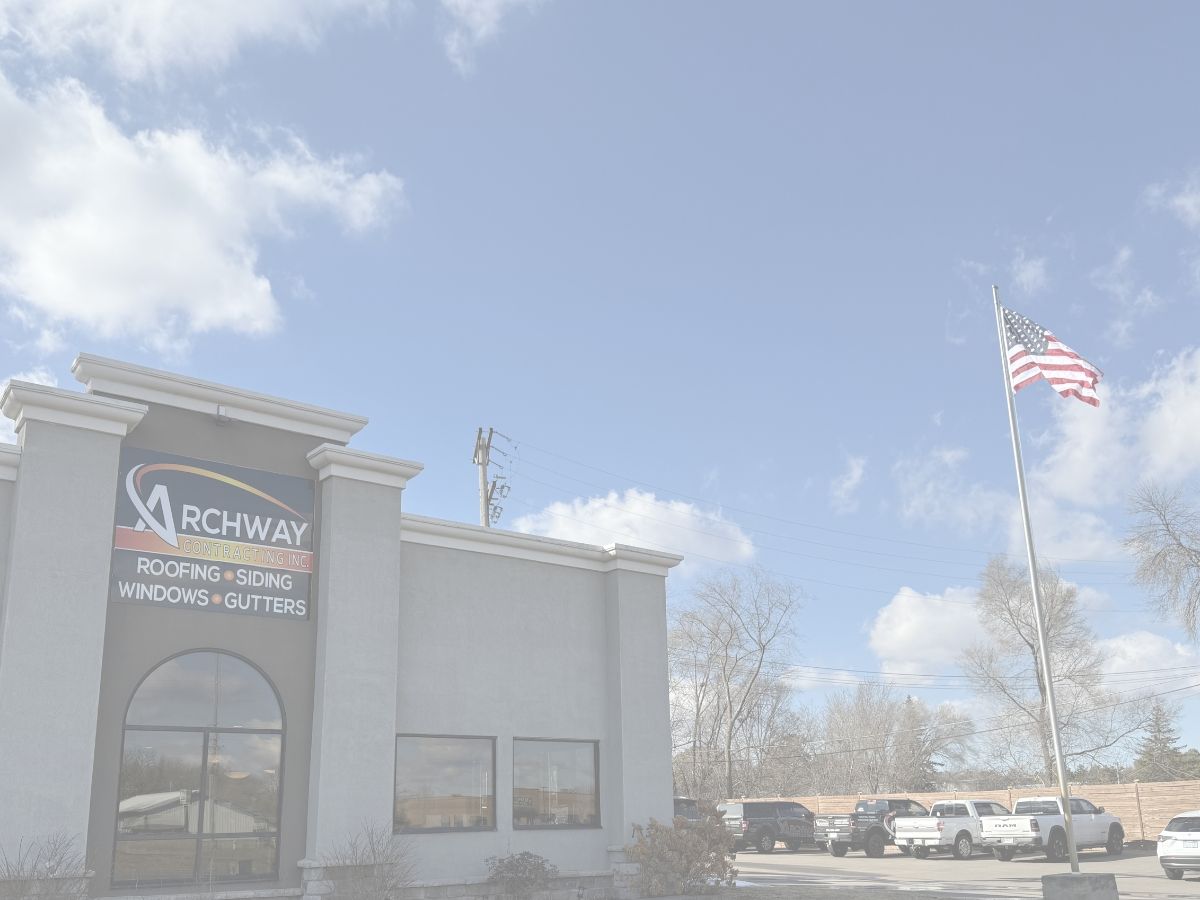
Established Archway Contracting main office in Ham Lake, MN
August 7, 2026
A company can be everywhere overnight. Here's why longevity and a proven track record matter more when choosing a Minnesota roofing contractor.

Roofing professional working on a new residential roof.
August 2, 2026
Aging shingles, granule loss, and sagging or leaking are three roofing red flags MN homeowners shouldn't ignore. Learn what each may mean and what to do.
Close-up of damaged roof during a free storm damage inspection on a Minnesota home.
July 29, 2026
A step-by-step guide to filing a storm damage insurance claim in Minnesota: what to document, how to work with your adjuster, and the deductible law to know.
Custom maintenance-free raised deck with wood-look boards, black metal railings, stairs, and a cover
By Sarah Peterson July 29, 2026
Planning a custom deck in Minnesota? Learn how our climate, decking materials, permits, and design choices affect your build before you start.
Minnesota home after a hail and wind storm, with a homeowner checking for visible exterior damage.
July 20, 2026
Hit by hail or high winds in MN? Here's a step-by-step guide to what to do after a storm, how to spot visible damage, and when to schedule an inspection.
Common problems homeowners face when coordinating multiple exterior contractors.
July 17, 2026
Should you hire one exterior contractor or manage roofers, siders, and gutter crews yourself? Here's how Minnesota homeowners decide when to call one team.
Archway Contracting repairing a Minnesota roof after exterior storm damage
June 29, 2026
Learn how to spot fake contractor listings, verify a Minnesota contractor, and avoid roofing, siding, gutter, and storm damage scams.
Show More