

Can You Replace a Roof in Winter in Minnesota?
Yes, roofs can often be replaced in colder Minnesota weather, within limits. Asphalt shingles have manufacturer guidelines for cold-weather installation, and experienced crews adjust their methods, like hand-sealing shingles, to install them properly. The bigger factors are usually whether your situation is urgent or can be planned, how scheduling and material availability line up, and the size of the project. The best way to know your options is a free inspection.
What actually changes when it gets cold

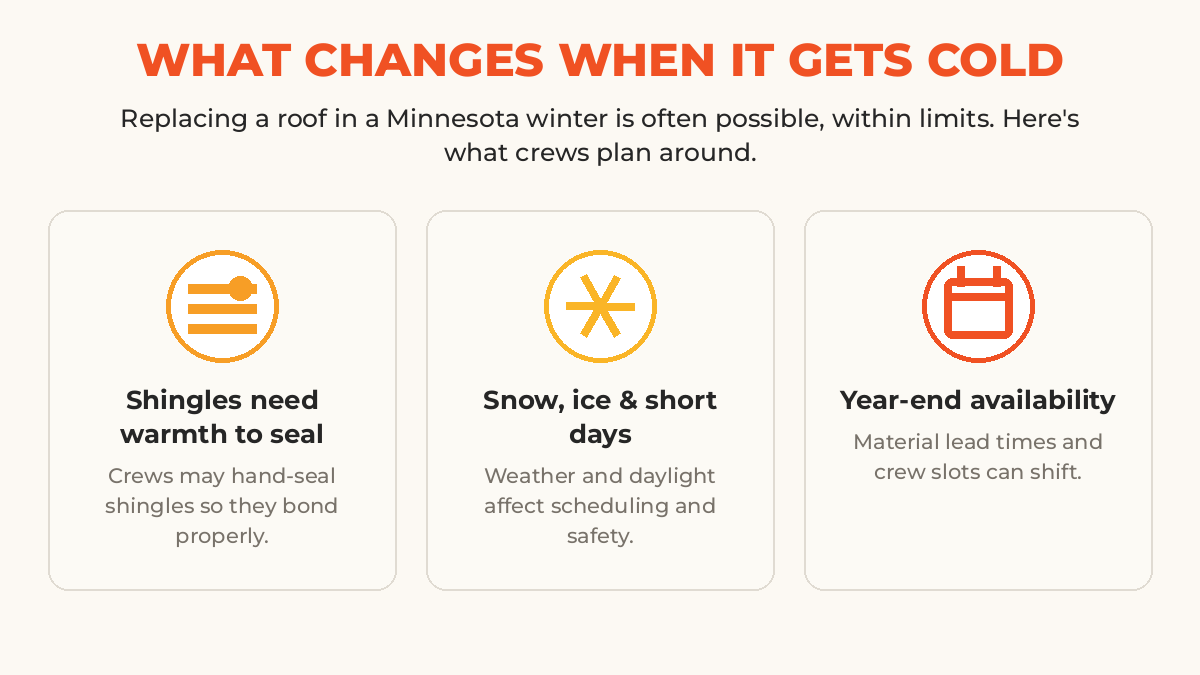
Cold weather doesn’t shut roofing down, but it does change a few things a good contractor plans around. Shingles are less flexible in the cold, and the self-seal strips that bond them together need warmth to activate, so crews may hand-seal shingles to make sure they adhere properly. Snow and ice on the roof, along with shorter daylight hours, affect scheduling and safety. And at year-end, material lead times and crew availability can shift. None of this makes a winter roof impossible. It just means the right approach matters more.
Urgent repair or planned replacement?

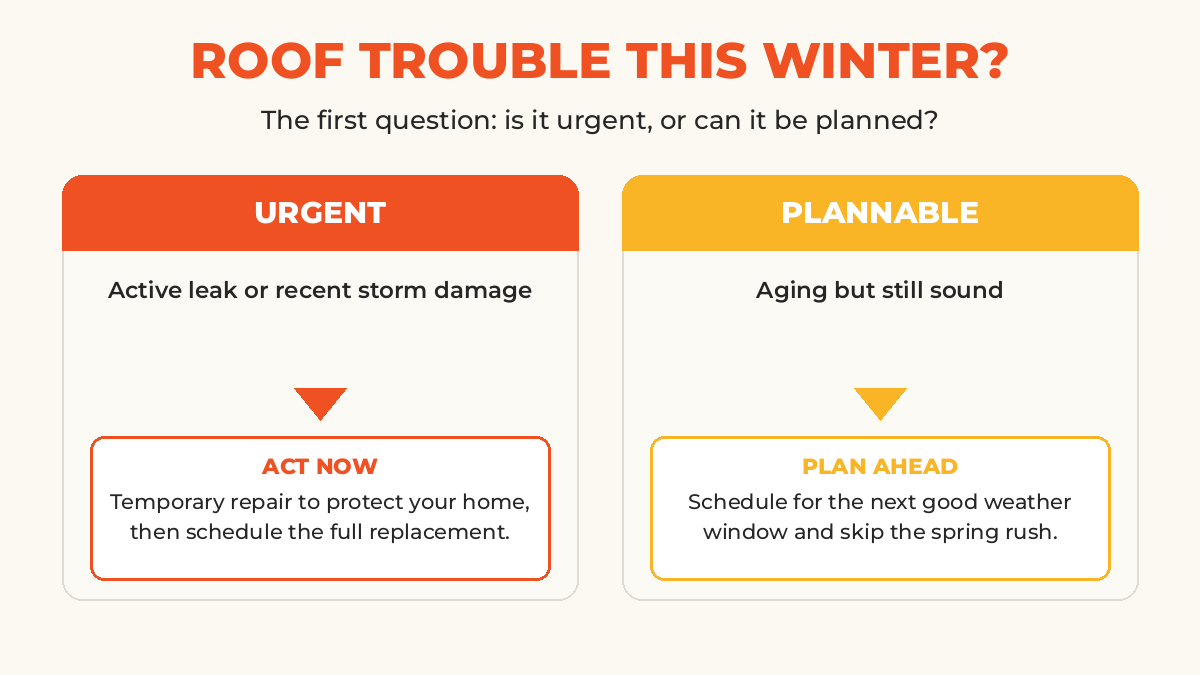
The first question is whether your roof can wait. There are really two situations:
- Urgent: If you have an active leak or recent storm damage, that needs attention now. Water getting into your home does not improve over a Minnesota winter, and a small problem can turn into a bigger one.
- Plannable: If your roof is simply aging and you are getting ahead of it, you may have the option to schedule for a better weather window rather than rushing.
Scope matters here too. A targeted repair is easier to fit into cold weather than a full tear-off and replacement, so part of the conversation is matching the work to the conditions.
What to do if repairs can’t wait
If your roof is leaking or was damaged in a storm, do not wait for spring. Start with an inspection so you know what you are dealing with. In many cases, a contractor can make a temporary or emergency repair to stop a leak and protect your home, then complete the full replacement once conditions allow. If the damage is storm-related, we document the observed damage for you, and you stay in control of any insurance claim. Our role is the inspection, documentation, and quality repairs, not managing the claim.
Planning ahead: the smart sequence

Even when a replacement is not urgent, there is an advantage to starting early. A roof project runs in a sequence: inspection first, then material selection, then scheduling. Popular shingle colors and product lines, along with crew slots, fill up, especially heading into a new season. Starting the sequence now means you are ready to go the moment a good weather window opens, rather than joining the spring rush.
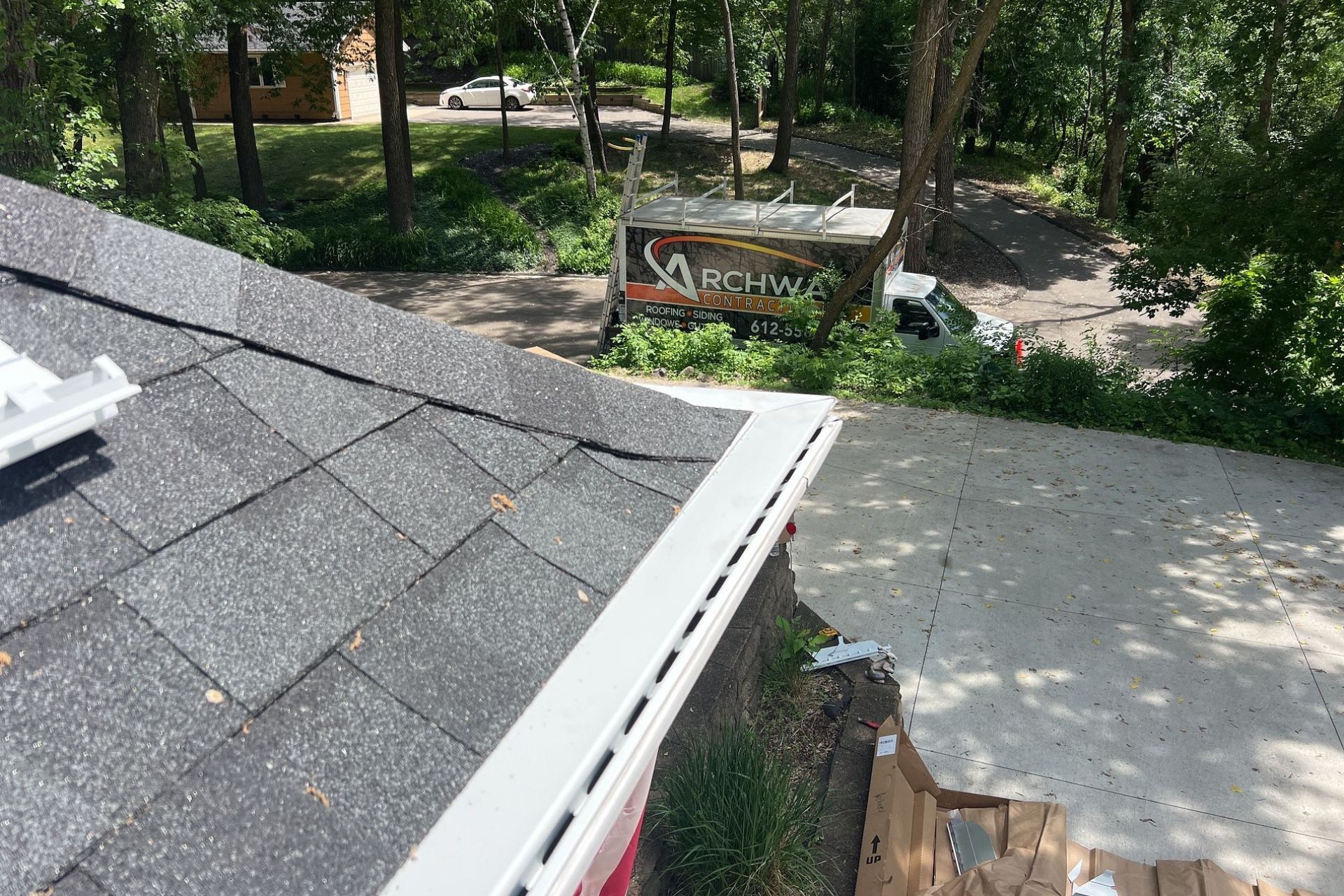
A few signs it may be time to plan a replacement: shingles that are curling, cracking, or missing across multiple areas, repeated leaks, or a roof nearing the end of its expected lifespan. Any of these may be a sign worth having looked at, and an inspection will tell you whether it is something to address now or plan for.
What a good contractor does in cold weather
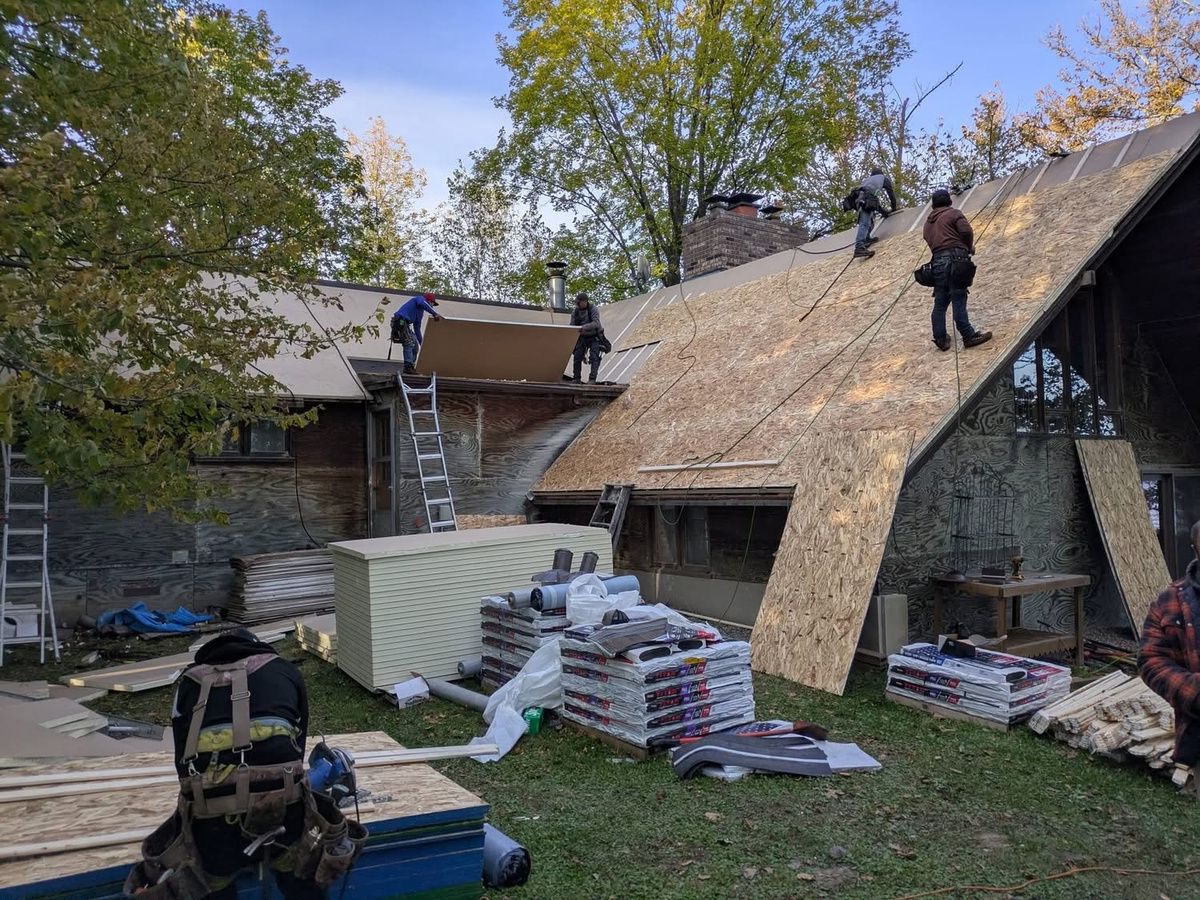
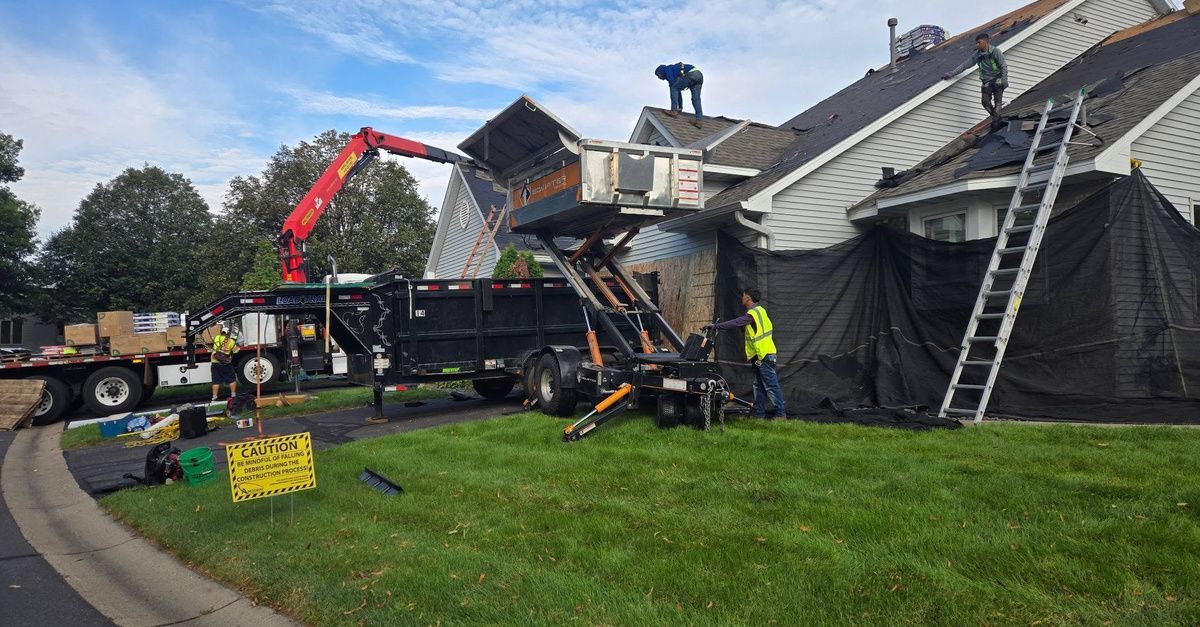
Winter roofing is about doing it right, not just doing it fast. A quality contractor follows the manufacturer’s installation guidelines, hand-seals shingles when conditions call for it, times the work around ice and daylight for safety, and is honest with you about what can be done well now versus what is better to schedule. If a contractor promises every project can be finished before the snow flies no matter what, be cautious. The honest answer depends on your roof and the weather.
frequently asked questions
Can a roof be replaced in winter in Minnesota?
Often yes, within limits. Asphalt shingles have manufacturer guidelines for cold-weather installation, and experienced crews adjust their methods, such as hand-sealing shingles, to install them properly. The deciding factors are usually urgency, scope, and scheduling.
What should I do if my roof is leaking in winter?
Do not wait. Start with an inspection. A contractor can often make a temporary repair to stop the leak and protect your home, then complete the full replacement when conditions allow.
Should I just wait until spring?
If your roof is sound and you are planning ahead, you may have that option, and planning now puts you first in line for an early window. If there is an active leak or storm damage, it is better to act rather than wait.
Does replacing a roof in winter cost more?
Cost depends on your roof and the scope of work, not the season alone. The best way to know is a written estimate based on your actual roof.
Winter roofing is about doing it right, not just doing it fast. A quality contractor follows the manufacturer’s installation guidelines, hand-seals shingles when conditions call for it, times the work around ice and daylight for safety, and is honest with you about what can be done well now versus what is better to schedule. If a contractor promises every project can be finished before the snow flies no matter what, be cautious. The honest answer depends on your roof and the weather.
Talk through your options
Whether your roof needs attention now or you are planning ahead for spring, the best next step is a professional look at its condition.
Request a free roof inspection to discuss your roof’s condition and the best scheduling options for your home.