
How to File a Storm Damage Insurance Claim in Minnesota (2026 Homeowner's Guide)
the short answer
To file a storm damage insurance claim in Minnesota, document the damage with dated photos, call your own insurance company to open the claim, get a free inspection from a licensed Minnesota roofer, and have that contractor meet your adjuster on the roof. You stay in charge of your claim the whole way, and you pay only your deductible — by state law, no contractor can waive it. Most Twin Cities claims take about 45 to 120 days from storm to final check.
The claim process, step by step
document the damage
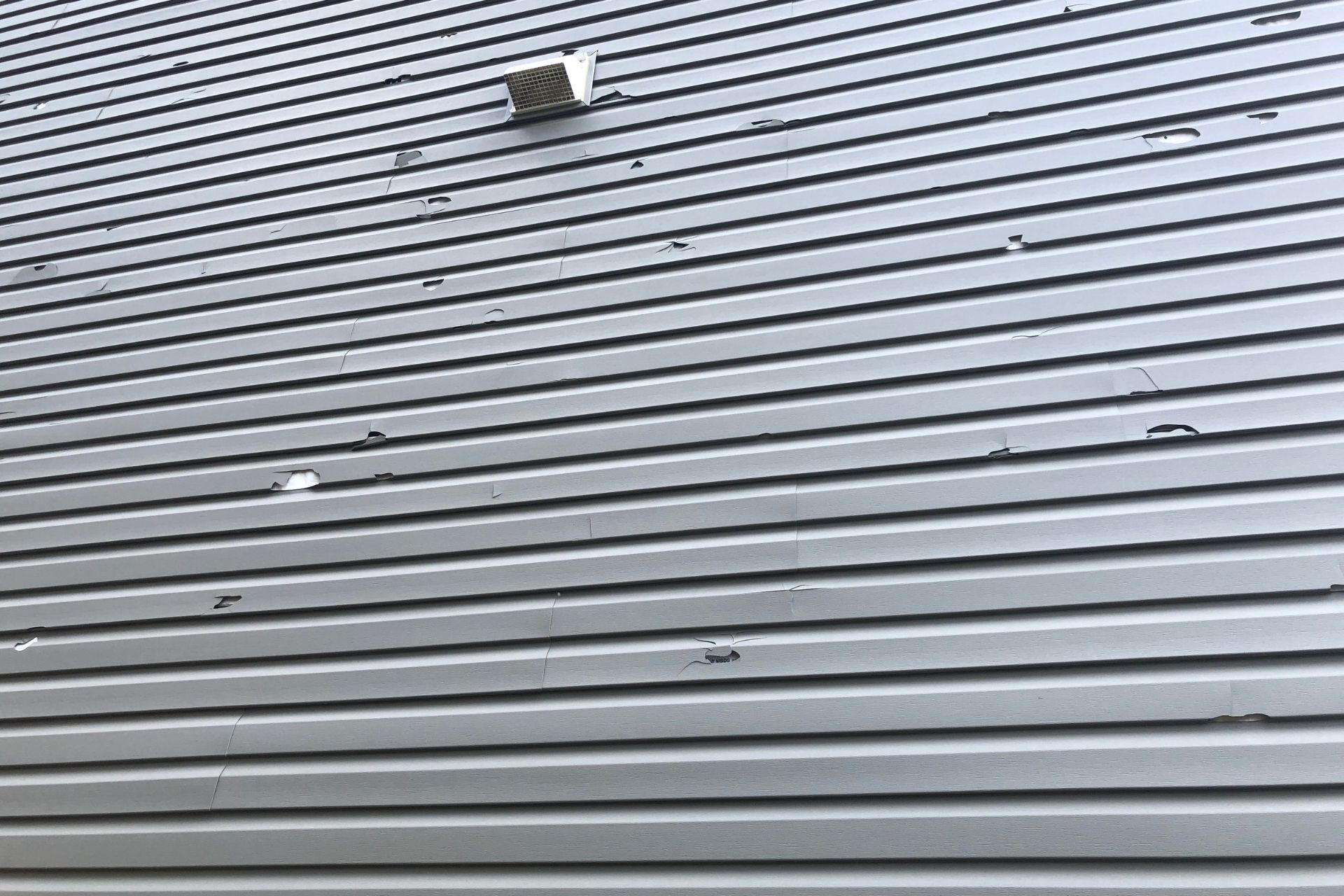
Take dated photos of anything you can safely see — dented gutters, torn shingles, cracked siding, broken windows. Note the date of the storm. You do not need to climb on the roof; a licensed roofer will do a safe, thorough inspection for you.
Get a free roof inspection before you file.
A qualified local roofer will tell you whether you actually have claim-worthy damage. This matters: if the damage won't meet your insurer's threshold, you avoid putting a paid-out claim on your record that never should have been filed. If the damage is real, your contractor documents the hail hits and wind damage in a photo report you can hand to your adjuster.
File the claim yourself.
Call your insurance company's claims line and open the claim. In Minnesota, your contractor is not allowed to file or negotiate the claim for you — that's the law, and it protects you (more on that below). You stay in control of your own claim.
Meet the adjuster on-site — with your contractor there.
This is the single most important meeting in the whole process. Your insurance company sends an adjuster to inspect the roof, usually marking hail hits within 10-foot-by-10-foot test squares on each slope. Having your roofer on the roof at the same time makes sure nothing gets missed — soft-metal dents on gutters and vents, damaged flashing, hits on the back slopes.
Review the scope and estimate.
Your insurer produces a written scope of work and estimate. As roofing and restoration experts, we can review it against what we documented on your roof and provide supporting documentation for anything the repair may still need — code-required items like ice-and-water barrier, discontinued or unavailable materials, or damage on slopes that are hard to see. This documentation and scope support helps make sure the approved repairs are complete. You (or a licensed public adjuster) remain the only party who negotiates the claim with your carrier.
Sign a contract and pay your deductible.
Once the scope is agreed, you sign with your contractor and pay your deductible. This is your responsibility and cannot legally be covered by the contractor in Minnesota.
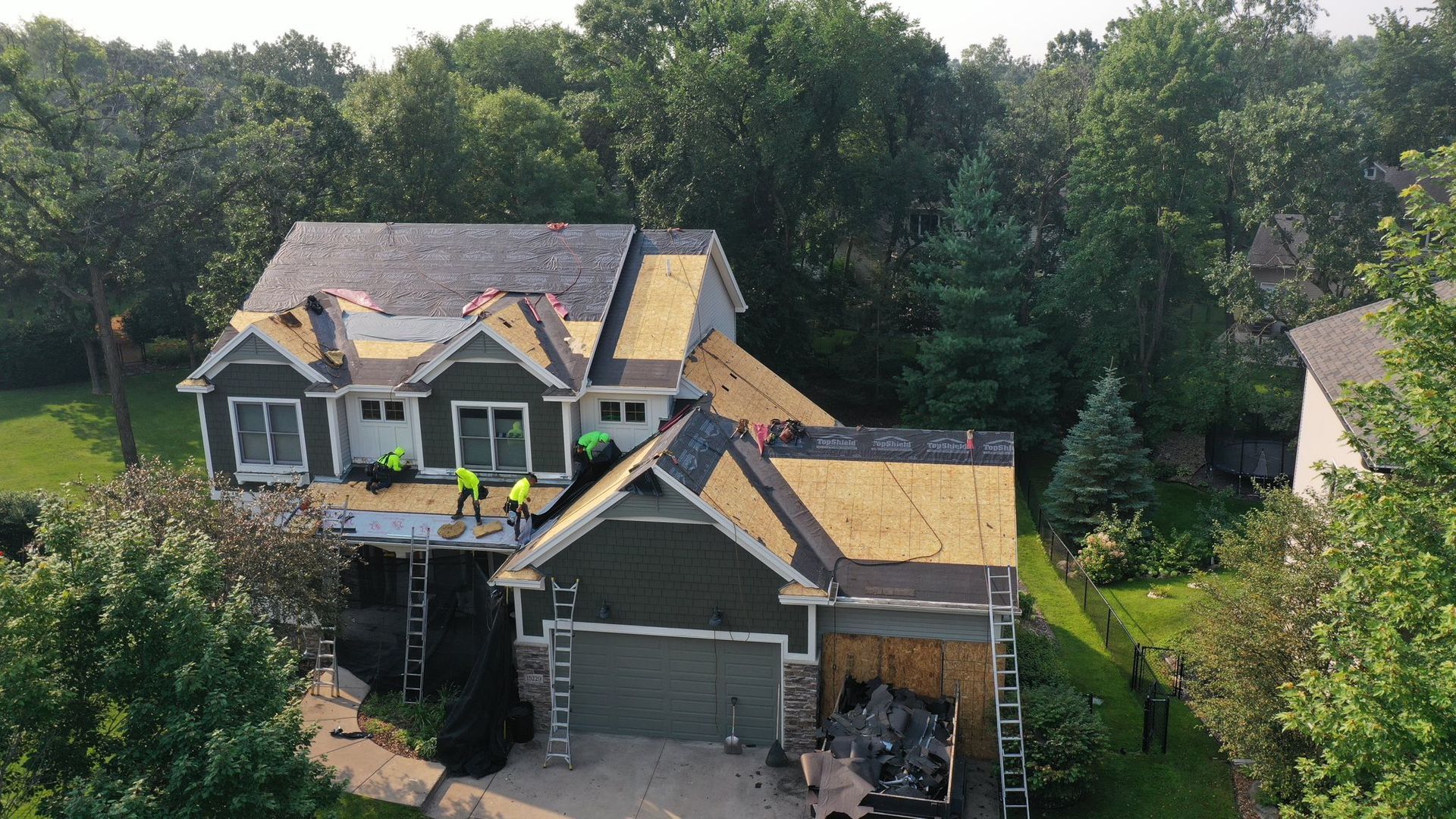
Work gets done, then final payment is released.
After the job is complete, your contractor sends the final invoice and a certificate of completion to your insurer. On a Replacement Cost Value policy, the insurer then typically releases the remaining money (called recoverable depreciation), and your out-of-pocket cost is generally your deductible. (Your exact costs depend on your policy — see the section on RCV vs. ACV below.)
Minnesota rules every homeowner should know
Minnesota has more hail and wind losses than almost any state — it ranked #1 in the country for hail-claim payouts in a recent year — so the state has specific laws that protect homeowners during storm-damage claims. Knowing these three puts you in control.
A contractor cannot pay, waive, or rebate your deductible.
Under Minnesota Statute § 325E.66, it is illegal for a roofing or siding contractor to offer to cover any part of your insurance deductible on insurance-funded work. Violations carry fines of up to $10,000 each. If a contractor says "we'll take care of your deductible" or "the work will be free," they are offering to break state law — and that's your signal to walk away. A legitimate Minnesota contractor will tell you your deductible up front and explain that it's due before work begins.
A contractor cannot negotiate or represent your claim.
Only a licensed public adjuster — or you — can negotiate or manage an insurance claim. A licensed contractor can inspect, document the damage, provide a bid, coordinate with and work directly alongside your adjuster on-site, and complete the repairs. What a contractor cannot do is negotiate, represent, or manage the claim on your behalf, or interpret your insurance policy. Anyone offering to "handle your whole claim," "fight your insurance company," or "maximize your settlement" is describing public adjusting — which most contractors are not licensed to do. That's a red flag.
You have a 72-hour right to cancel after a denial.
Under Minnesota Statute § 326B.811, if your insurer denies the claim, you have the right to cancel an insurance-funded roofing contract within 72 hours. You are not locked in.
Watch your timeline.
File promptly. Many Minnesota homeowner policies expect notice soon after the storm, and carriers have denied claims filed a year or more later even when the hail damage was obvious. The clock effectively starts the day the storm hits, so don't wait.
This guide is for general education and isn't legal or insurance advice. Your policy terms and your specific situation control — check your declarations page and talk to your insurance representative.
What your policy pays: RCV vs. ACV
Two sets of letters decide how much money you actually get, so it's worth understanding them before you file.
Replacement Cost Value (RCV) pays the full cost to replace your roof, minus your deductible. This is the better coverage. Your out-of-pocket is just the deductible.
Actual Cash Value (ACV)
pays the replacement cost minus depreciation for the age and wear of your roof. On a roof that's 10 or more years old, that depreciation gap can leave you owing several thousand dollars beyond your deductible.
One more thing to check: many Minnesota policies have a separate wind/hail deductible that's a percentage of your home's insured value — often 1% to 5% — rather than a flat dollar amount. On a home insured for $400,000, a 2% wind/hail deductible is $8,000. Look at your declarations page so there are no surprises.
Red flags: how to spot a storm chaser
After a big Minnesota hailstorm, out-of-town crews flood the area. Here's how to tell a trustworthy local contractor from a storm chaser:
- "We'll pay your deductible." Illegal in Minnesota. This single sentence disqualifies them — you don't need to check anything else.
- Pressure to sign before the adjuster comes. A reputable contractor lets the claim process play out. Signing early can lock you in before anyone knows the real scope.
- An "Assignment of Benefits" (AOB) form. This hands your claim rights over to the contractor. Don't sign one. A good contractor works as your contractor, not as the owner of your claim.
- Out-of-state license plates and unfamiliar company names. If you need warranty work in year three, will they still be in Minnesota? Local, licensed, and reputation-driven beats fast and gone.
frequently asked questions
How long do I have to file a storm damage claim in Minnesota?
File as soon as possible after the storm. Minnesota policies generally expect prompt notice, and claims filed a year or more later are frequently denied even when the hail damage is clear. Treat the day of the storm as the start of the clock.
Can my roofer pay my deductible?
No. Minnesota Statute § 325E.66 makes it illegal for a contractor to pay, waive, or rebate your deductible on insurance-funded work. Anyone offering to is breaking state law.
Do I have to use the contractor my insurance company suggests?
No. You choose your own licensed contractor. Your insurer may offer a preferred vendor, but the decision is yours.
Will filing a claim raise my rates?
Storm and hail claims are weather-related, not driver-error claims, and are often treated differently than at-fault claims. Ask your agent how your specific carrier handles it — and getting a pre-claim inspection first helps you avoid filing on damage that wouldn't have paid out anyway.
How long does the whole process take?
A typical Twin Cities storm claim runs about 45 to 120 days from the storm to the final insurance check, depending on scheduling, adjuster availability, and material lead times.
Talk to a local storm restoration team
Archway Contracting is a family-owned storm restoration contractor and Insurance Restoration Specialist based in Ham Lake, serving Minneapolis, St. Paul, and communities across Minnesota and western Wisconsin. While we are not insurance adjusters and do not interpret insurance policies, we assist homeowners by explaining the storm restoration steps, providing supporting documentation, and working directly with claim adjusters toward complete, approved repairs.
We provide free storm damage inspections, document the damage for your claim, work alongside your adjuster on the roof, and complete the exterior restoration — all while keeping you in control of your own claim, exactly as Minnesota law requires.
If a storm has hit your home,
request your free inspection and we'll walk you through the process with no pressure and no obligation.
Last reviewed: 2026.
Recent Posts